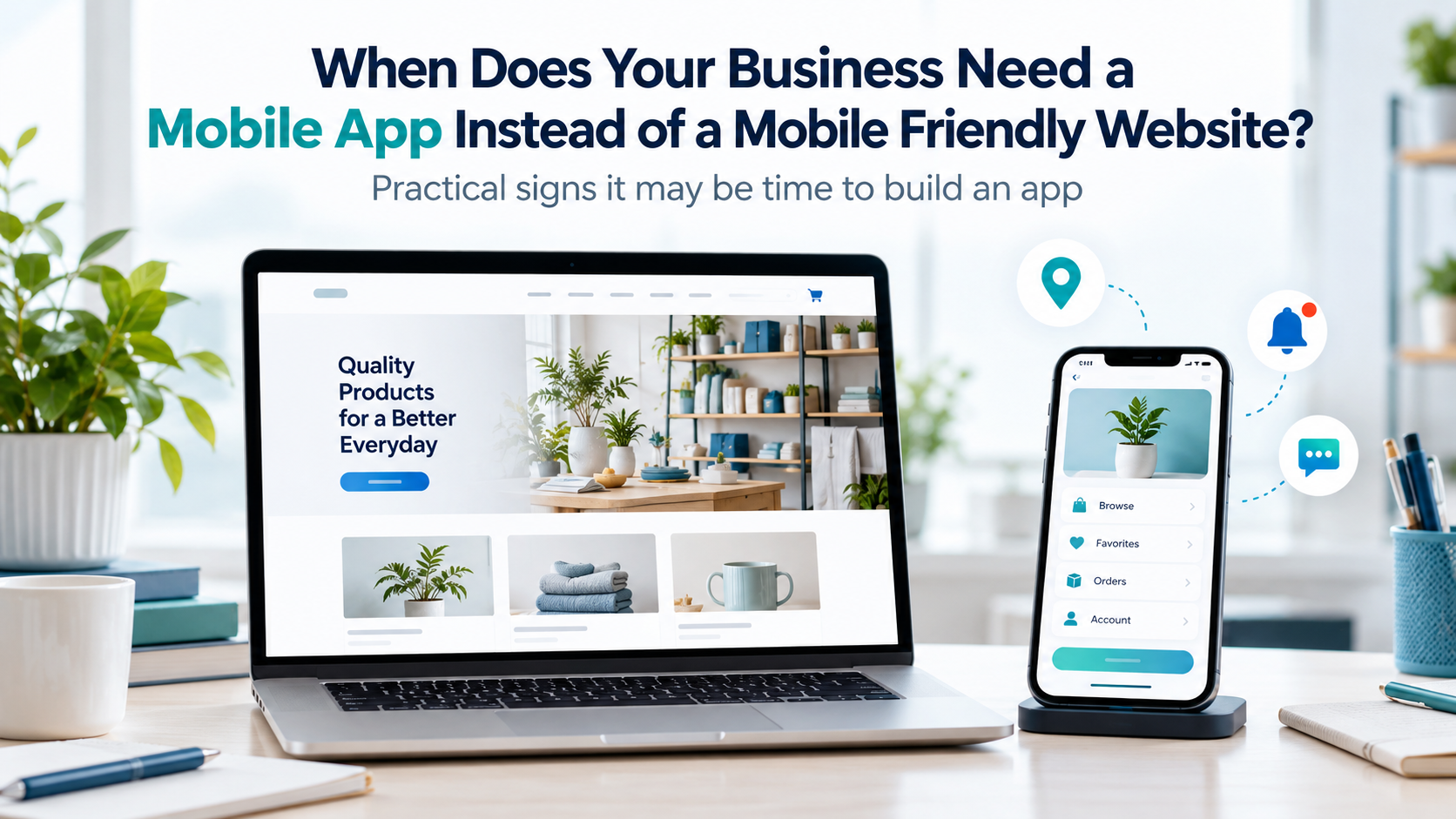
A mobile friendly website is often the best place to start. It gives customers a way to find your business, learn about your services, and take action from a phone without downloading anything. But as your business grows, you may reach a point where a dedicated mobile app can make the experience easier, more useful, or more engaging.
The decision isn’t about having the newest technology. It’s about whether an app solves a real problem for your customers and your business.
Your customers come back often
An app is more compelling when people return regularly. A customer who checks an event schedule once a year may be well served by a website. Someone who checks a schedule every week, manages appointments, tracks orders, or uses a loyalty program may benefit from an app that keeps those tasks close at hand.
Ask how often customers need to interact with you, and whether an app would make those repeat visits quicker or more convenient.
You need timely, useful notifications
Push notifications can alert customers about a booking, an order, a schedule change, or a time-sensitive update. They can also remind users about something they asked to follow.
Notifications work best when they are relevant and expected. If the main goal is simply to send occasional promotions, email or text may be a better fit. An app makes more sense when notifications support an ongoing service or help people act at the right time.
Location is part of the experience
If customers need directions, nearby locations, venue maps, or location-based information, an app may provide a smoother experience. This can be useful for events, healthcare services, travel, delivery, and businesses with multiple locations.
A mobile website can also show maps and location details. The question is whether customers need location features repeatedly or as part of a larger task such as checking in, navigating a venue, or finding nearby services.
Your service needs features that work together
Some experiences involve more than reading pages. An app may be worthwhile when customers need a combination of features such as secure accounts, saved preferences, camera access, offline content, appointment management, barcode scanning, or real-time updates.
Consider the whole customer journey. If people must move between several tools or repeat the same steps, an app designed around that workflow could make the service simpler.
Your business can support an app after launch
An app is an ongoing product. It needs updates, testing, support, and a plan for keeping users engaged. Your team should be ready to maintain it and improve it as customer needs change.
Before committing, consider the full cost: design and development, app store preparation, device testing, updates, and support. A well-built mobile website may be the better investment if customers don’t need app-specific features or frequent interaction.
A practical way to decide
Start with these questions:
- Do customers return often enough to benefit from an app?
- Would push notifications help them complete an important task?
- Does the service rely on location, device features, or real-time updates?
- Would an app make a frequent customer journey meaningfully easier?
- Can your business maintain and improve the app over time?
If most answers are no, begin with a fast, mobile friendly website. If several are yes and you can point to a clear customer need an app may be the right next step.
Build for the need, not the label
A website and a mobile app can work together. Your website can introduce the business and serve customers who are browsing, while an app can support people who use your service repeatedly or need more interactive tools.
At Otto Web Solutions, we help businesses evaluate the right approach and build responsive websites and mobile apps around real customer needs. The best starting point is a clear problem to solve, followed by a product that makes the solution easy to use.